


At the beginning of this year, at Black Hat Federal Conference, I proposed a simple taxonomy that could be used to classify stealth malware according to how it interacts with the operating system. Since that time I have often referred to this classification as I think it is very useful in designing system integrity verification tools and to talk about malware in general. Now I decided to explain this classification a bit more as well as extend it of a new type of malware - the type III malware.
The article is available as a PDF document here.
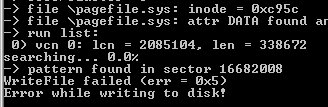 It quickly turned out that our exploit doesn’t work anymore! The reason: Vista RC2 now blocks write-access to raw disk sectors for user mode applications, even if they are executed with elevated administrative rights.
 Everybody talks now about the latest Vista RC1 and how ready it is for being shipped to customers. So, I downloaded Vista RC1, Build 5600, x64 edition from MSDN a couple of days ago and gave it a try... To my surprise, it turned out that it's still vulnerable to the signature check bypass attack which I demonstrated nearly 2 months ago at the
  The idea behind Blue Pill is simple: your operating system swallows the Blue Pill and it awakes inside the Matrix controlled by the ultra thin Blue Pill hypervisor. This all happens on-the-fly (i.e. without restarting the system) and there is no performance penalty and all the devices, like graphics card, are fully accessible to the operating system, which is now executing inside virtual machine. This is all possible thanks to the latest virtualization technology from AMD called SVM/Pacifica.


